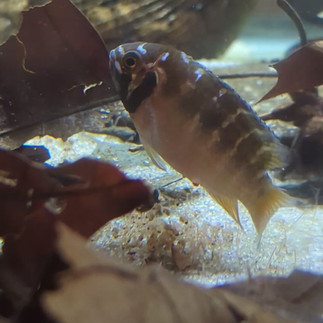
Ivanacara bimaculata
Matt Hendrichs
Ivanacara bimaculata
Egg depositor (flat rock)
Ratio: 1 male, 1 female
Unknown if both wild caught (male was wc and female was possibly hobby bred)
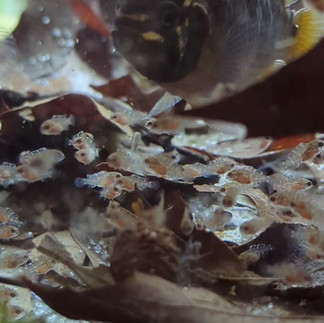
Approximate number of fry: 50+
Date of Hatch or Birth*: 1/25/2026
Date of Free Swimming If Hatched: 2/4/2026
Approx. Number of Fry at 30 Days*: 50+
Approx. Number of Fry at 60 Days:
Aquarium Conditions
pH (0 to 14): 6.0
TDS: 70
General Hardness (ppm): unknown
Average Temperature (F): 77
Average Nitrate (ppm): 20
Aquarium Size (L X W X H and Gallons): 10 gallon
Water Source: RODI
Water Changes (how much and how often): 20% every other week
Filtration System(s): 1 sponge filter
Additives (Salt, iron, etc.): fist-sized bag of Japanese Triple Red Line Super Hard Akadama soil mix medium grain
Décor
Live Plants: none
Wood: none
Leaves: oak leaves
Caves or Similar Hiding Places: none
Spawning mop: n/a
Gave them a round flat rock (originally a candle lid)
Substrate: sand and a layer of leaf litter
Lighting Type and Timing: none
Food Fed to Parents and How Often*: rotation of Extreme Nano pellets, baby brine shrimp, and live blackworms
Food Fed to Fry and How Often*: baby brine shrimp 2x/daily
A pair of wc Ivanacara bimaculata were purchased from Steve Lawson in early 2025. The female laid a few eggs here and there and then we lost her. In August 2025 a female (suspected hobby bred) was purchased from Londontowne Tropicals. In October, the male and female were introduced and since then they had about 4-5 unsuccessful spawns. The eggs would quickly fungus. Finally she got it right and kept them clean until they hatched.
Once hatched, they remained wigglers for about 10 days before they were free swimming. This is much longer than other dwarf cichlids like Apistogramma sp. I have bred. Having read I. bimaculata are great parents, the fry remained with the male and female. Both helped guard the babies until they were removed. The fry were moved to a 20 gallon high about a week or two ago and are slowly being converted to tap water. The fry are now big enough to eat live blackworms and pellets.